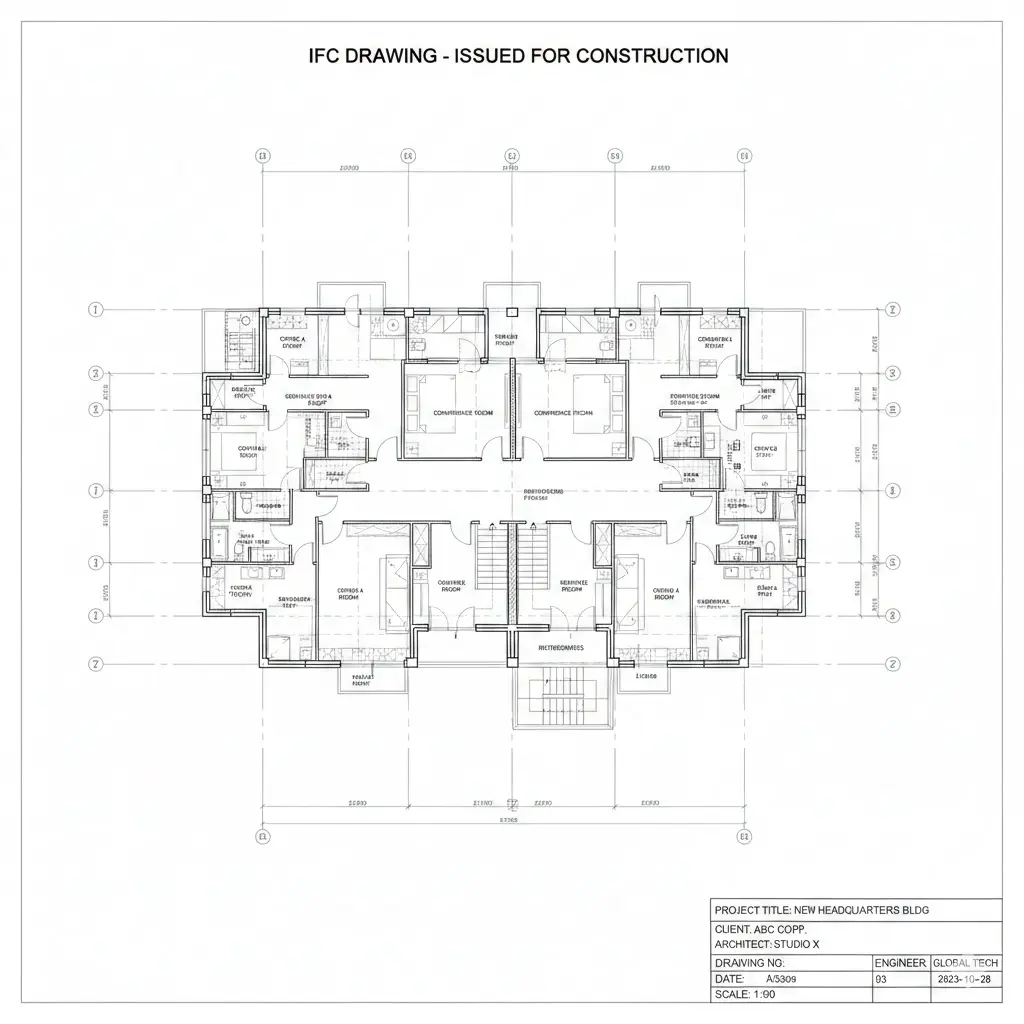
Let’s draw a picture! You get into your bedroom, drop your bag, and sit on your bed to take some rest after a tiring working day. If you don’t feel comfortable and something is looking off in your room, it might be the room size. As a layman, you can’t understand it, but a drafter can easily get this point.
Around 90% of the bedroom size problems start from the drawing phase. They don’t show up when drawings are in process, but when inhabitants start living in it. So, it’s a planning decision that affects the permits, future construction costs, and comfort. This is where professional architectural drafting plays a key role in defining accurate bedroom dimensions that balance comfort, function, and building standards.
What Is the Standard/Average Size of a Bedroom?
In the US, the average bedroom size is measured at around 11 feet by 12 feet, which is equal to 132 sq ft. This size is ideal as it gives enough space for a good-sized bed, furniture, and free walking. It’s what many builders quietly treat as the safe middle. Not too big; not too small; just workable.
You might have seen smaller bedrooms, particularly in older houses or children’s rooms in modern houses. Actually, today construction is what has started considering the bedroom size.
Well, the bedroom size is not set randomly; it requires the expertise of a drafter, who can professionally set the bedroom dimensions, considering the needs of inhabitants.
Standard Bedroom Sizes by Room Type
Instead of guessing, most professionals think in ranges. Here’s a quick reference that helps frame expectations:
| Room Type | Size (Feet) | How It’s Usually Used |
| Small bedroom | 9′ × 10′ | Child or guest room |
| Standard bedroom | 10′ × 12′ | Full or queen bed |
| Master bedroom | 14′ × 16′ | King bed + seating |
| Large master | 16′ × 18’+ | Bed + sitting area |
This table shows what usually works in real homes. These are not just numbers pulled from a rulebook. They reflect how people move, store clothes, and live in different types of rooms.
Building Codes & Regulations for Bedroom
Building codes allow bedrooms as small as 70 square feet. Technically, that’s legal. But legality and comfort are not the same thing.
Let’s consider an example! There is a 7 sq ft bedroom. In a setting, you can push it against the wall, but this will leave no room for walking and other furniture items, like a dressing.
Professional drafters rarely design bedrooms that small unless they’re forced to. Instead, they aim for sizes that allow normal movement and furniture placement. That’s the difference between a room that merely passes inspection and one that people enjoy using.
The Effect of Bedroom Size on the Rest of the Things
The bed is the anchor of the room. Everything else reacts to it. A queen bed, for example, isn’t just 60 inches by 80 inches. Once you add walking space around it, the bed quickly controls the entire layout.
Here’s a simple way to think about it:
| Bed Type | Mattress Size | Room That Feels Comfortable |
| Twin | 39″ × 75″ | 8′ × 10′ |
| Full | 54″ × 75″ | 10′ × 10′ |
| Queen | 60″ × 80″ | 10′ × 12′ |
| King | 76″ × 80″ | 12′ × 12′ or larger |
But here’s the part people forget: the bed itself is only the beginning. You still need space around it.
Th Best Walking Space Around the Bed
Imagine getting out of bed at night. You shouldn’t have to turn sideways or step over things. If you need a comfortable bedroom, its size must be around 30 to 36 inches around the bed. In this space, you can freely set the dressing on any other furniture component.
So, two bedrooms with the same square footage can feel completely different. One respects walking space. The other doesn’t. In drafting, this isn’t guesswork. Beds are drawn to scale. Clearances are checked before construction ever begins.

What is the Average Master Bedroom Size?
A master bedroom is mostly the largest room in the house, and it connects with a bathroom and a wardrobe. You can also add a small seating area or desk in this room, which means more space.
All the space needs to be cleaned and managed daily, needing free space for easy work. In the US, the standard master bedroom size is measured around 14 feet by 16 feet, or roughly 224 square feet.
That size usually allows:
- A king bed
- Two nightstands
- A dresser
- Some open floor space
How to Balance a Bedroom Layout & Square Footage
You can have a big room that feels uncomfortable. This usually happens when:
- The door opens into the bed
- The window blocks the nightstands
- Closet doors collide with furniture
- Walking paths feel awkward
Good drafting solves these problems before construction starts. Therefore, CAD drawings show door swings, furniture footprints, and clear walking paths. These details aren’t decoration; however, they’re problem prevention.
What is the Best Closet Size in a Bedroom?
Closets are not considered during drafting and room sizing, and they mostly become a headache when setting in the room. One must size it correctly. The ideal size of a closet is measured at around 24 inches in depth. And if you are considering a walk-in closet, it must be of 5×5 feet to function well.
Closet size directly affects bedroom size. Too small, and storage fails. Too big, and the bedroom feels robbed of space. Drafting is about finding that balance.
How to Choose the Best Doors & Windows Size for a Bedroom
Doors and windows quietly control how a bedroom works. A swinging door takes up space when it opens. If it swings into the wrong area, it can block furniture or walking paths. Pocket doors are sometimes used to save space, but they require planning.
Furthermore, a bedroom, which is mostly used for sleeping, must have an egress window for emergency escape. It must be large for easy going out. In the US, inspectors always check this point in the layouts when you apply for permission.
Therefore, professional drawings show exact window sizes, sill heights, and opening dimensions.
How Ceiling Height Affects the Bedroom Size
For residential construction, consider a ceiling height of at least 7 feet, as lowering this can make the room tight and dark. With a higher ceiling, your room will look more open. Therefore, it is essential to label the room perfectly when you are adding slopes or beams in the room.
The Role of CAD Drafting in a Bedroom Sizing
Bedroom means any elements involved: bed setting, walking space, safety, comfort, and above all, code compliance.
When bedroom sizes aren’t handled correctly, problems show up as:
- Failed inspections
- Permit resubmissions
- Furniture that doesn’t fit
- Last-minute design changes
- Frustrated clients and builders
Good CAD drafting reduces these issues by checking dimensions, layouts, and clearances before construction starts.
Common Things That Affect Bedroom Size
Bedroom size isn’t chosen in isolation. It’s shaped by the overall home size, budget, family needs, furniture choices, mechanical systems, and local building codes. A good drafter considers all of these at once instead of focusing on square footage alone.
A Simple Bedroom Drafting Checklist
Bullets help here, so we’ll keep them short and useful:
- Room dimensions labeled
- The bed size fits with the walking space
- Closet depth shown correctly
- Door swings don’t block movement
- Egress window meets code
- Ceiling height labeled
- HVAC and lighting coordinated
Discover the perfect bedroom size for your home—read our complete guide to standard bedroom dimensions now!
Final Thoughts
The bedroom is your personal space where you spend a third of your life. When they’re designed poorly, people feel it every single day.
At CAD Drafters, we focus on drawings that reflect how people actually live, and not just what barely passes code. We help contractors, architects, engineers, and designers avoid layout mistakes before they become construction problems.
If you want bedroom plans that pass permits, fit real furniture, and feel comfortable once built, that’s where we come in.
Send us your plans! We’ll help you get the bedroom size right the first time.
Frequently Asked Questions
- What is the smallest legal bedroom size?
About 70 square feet, but it’s rarely comfortable. - What bedroom size works best for a queen bed?
At least 10 feet by 12 feet. - What bedroom size works best for a king bed?
At least 12 feet by 12 feet, preferably larger. - Do closets count in bedroom square footage?
Yes, if they’re inside the room. - Do bedrooms need windows?
Yes, for light and emergency escape. - How high must a bedroom ceiling be?
At least 7 feet in most homes. - Is bigger always better?
No. Smart layout matters more than size. - Why use CAD drafting for bedroom design?
Because fixing mistakes on paper is cheaper than fixing them on site.