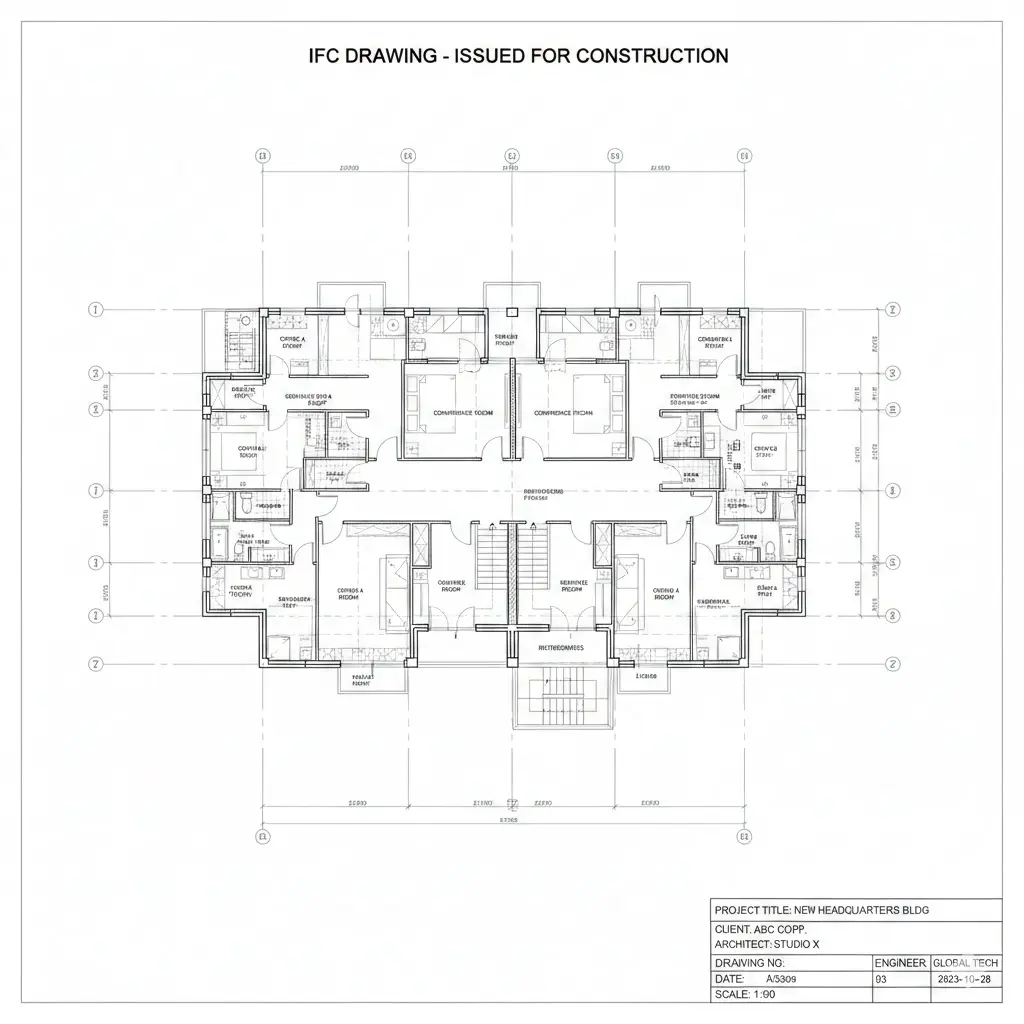
Tiny homes have become one of the most talked-about housing trends in recent years. When someone asks, “How big is a tiny home?” the short answer is usually under 400–500 square feet, although most fall between 200–300 square feet. To put that in perspective, that’s about the size of a small studio apartment or a single-car garage.
Despite their compact size, tiny homes offer practical, efficient, and even luxurious living for people who want to simplify their lives. Understanding dimensions is not just about square footage; it’s about making every inch count and designing a home that works for your lifestyle.
Tiny homes appeal to minimalists, mobile enthusiasts, and anyone looking for a cost-effective way to live. Whether on wheels or a permanent foundation, the dimensions of a tiny home directly influence daily comfort, furniture placement, and even legal compliance. For prospective owners, knowing these dimensions upfront is crucial for a successful build.
To better understand how space planning works in compact homes, explore our detailed guide on average bedroom size and how dimensions impact comfort and functionality.
Average Size of Tiny Homes
Most tiny homes range from 100 to 400 sq. ft., with many popular designs landing around 250 sq. ft. This can vary, depending on the type of house you are building. Below is the comparison table for better understanding.
| Space Type | Square Feet | How It Feels |
| Studio Apartment | 350–450 | Average urban living space for one person |
| Tiny Home | 200–300 | Compact, efficient living requires smart design |
| Van Conversion | 80–150 | Highly mobile, minimal space for essentials |
Comparing tiny homes to familiar spaces can help people visualize their size.
- A tiny home of around 250 square feet might feel like a studio apartment, with a combined living and sleeping area, a small kitchen, and a bathroom.
- A van conversion, by contrast, typically offers 80 to 150 square feet, requiring creative use of foldable furniture and multi-purpose storage.
Understanding these differences helps prospective owners make informed decisions about which tiny home size fits their needs.
Regional differences also play a role in tiny home size. Certain states or municipalities have minimum or maximum square footage requirements for tiny homes on foundations, while trailers must adhere to road limits.
Also, Tiny home sizes vary across the U.S. In the Pacific Northwest, homes are often taller with lofted ceilings to maximize vertical space, while Southeast homes focus on hurricane-safe design and often stay compact. In the Midwest, insulation is a priority, affecting usable interior dimensions.”
To see how professionals plan and visualize compact layouts like these, read our guide on architectural drawings and how they help define space, layout, and compliance before construction begins.
Average Tiny Home Dimensions by U.S. Location
| Region / City | Average Tiny Home Size (sq. ft.) | Common Layout Features | Legal / Zoning Notes |
| Seattle, WA | 220–280 | Lofted sleeping, open kitchen/living | Height limits ~13.5 ft for trailers; strict city permitting |
| Portland, OR | 230–300 | Tall ceilings, multi-purpose lofts | Residential zones allow foundation and trailer homes; ADUs are popular |
| Austin, TX | 200–260 | Compact kitchen, foldable furniture | Trailer homes are limited to 8.5 ft in width; foundation homes require permits |
| Miami, FL | 180–240 | Hurricane-safe construction, elevated floors | Strict hurricane codes; foundation homes must meet wind resistance standards |
| Chicago, IL | 210–270 | Insulated walls, lofted sleeping | Zoning codes vary by neighborhood; trailer homes are often restricted |
| Minneapolis, MN | 200–280 | Extra insulation, compact kitchen | Cold climate requires thick insulation; foundation homes are preferred |
| Denver, CO | 220–290 | Open layouts, lofted beds | Trailer homes are limited to road-legal dimensions; foundation homes need permits |
| New York, NY (upstate) | 210–250 | Tiny homes for rural/seasonal living | Rural zoning is easier; city areas are highly restrictive |
Tiny House Dimensions for Homes on Wheels
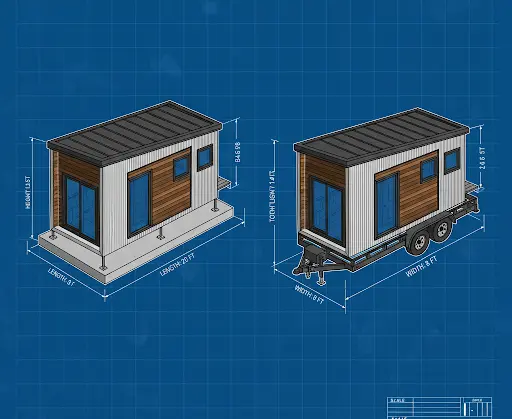
Tiny homes on wheels face unique challenges because road regulations restrict their size.
| Maximum width | Maximum height | Maximum length |
| 8–8.5 ft | ~13.5 ft | 20–30 ft |
These restrictions affect not only the exterior size but also interior layouts, from the loft’s headroom to kitchen aisles and bathroom spaces.
Trailer Weight & Towing Considerations for Wheeled Tiny Homes
Towing considerations are critical for wheeled tiny homes. Heavier trailers require larger tow vehicles, and material choices affect overall weight. A tiny home that exceeds weight limits may not be road-legal or safe to transport.
Permits & Legal Restrictions for Wheeled Tiny Homes
Permits and legal restrictions vary by state, making it essential to plan dimensions with local codes in mind. Despite these limitations, trailer homes offer unmatched mobility, allowing owners to relocate or avoid expensive property costs.
Here’s a table showing permits & legal restrictions by state/city.
| State / City | Max Trailer Width | Max Trailer Height | Foundation Allowed? | Notes |
| Washington (Seattle) | 8.5 ft | 13.5 ft | Yes | Permits required for the foundation |
| Oregon (Portland) | 8.5 ft | 13.5 ft | Yes | ADU zoning allows a foundation |
| Texas (Austin) | 8.5 ft | 13.5 ft | Yes | Road-legal trailers limited |
| Florida (Miami) | 8.5 ft | 13.5 ft | Yes | Must meet hurricane codes |
Foundations Vs Trailers
1. Foundation
Tiny homes built on permanent foundations differ from their mobile counterparts. Foundation builds typically allow slightly more square footage, better headroom, and more flexible layouts. These homes are not limited by road width or height, which opens opportunities for expanded kitchens, lofts, and storage solutions. However, foundation homes often come with higher costs due to permits, construction, and land purchase requirements.
Advantages of Foundations:
- Larger square footage
- Custom layouts
- Stable, permanent placement
2. Trailers
Trailer homes, while limited in size, offer the advantage of mobility. They can bypass certain zoning restrictions, relocate seasonally, and provide the freedom to explore different areas. Cost implications are notable; foundation homes may require thousands of dollars more than a trailer, but trailers may require investment in tow vehicles and additional insurance.
Advantages of Trailers:
- Mobility
- Bypasses some zoning restrictions
- Flexible location
Note: Choosing between foundation and trailers depends on your lifestyle, budget, and priorities for mobility versus permanence.
Tiny Homes’ Size Interior Breakdown
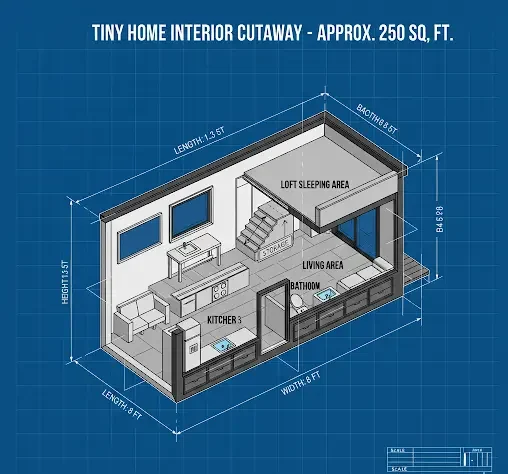
The interior of a tiny home is where design choices truly matter. A few inches can drastically affect usability, comfort, and overall livability.
Kitchen Design Dimensions
Kitchen design is critical; counters need a minimum of two to four feet of space, and aisles must be at least two and a half feet wide to allow for movement. Simply,
- Counter space: 2–4 ft minimum
- Aisle width: 2.5–3 ft for comfortable movement
For accurate kitchen layouts and space planning in compact homes, refer to our detailed guide on architectural drafting and how precise drawings ensure functionality in small interiors.
Bathroom Layout
Bathroom layouts also require careful planning. A standard shower may take up a minimum of 30 by 30 inches, and toilet placement requires adequate clearance for comfort. Simply,
- Standard shower: 30×30 in minimum
- Toilet spacing: 2 ft clearance
Loft and Headroom
Lofted sleeping areas often feature headroom between 36 and 42 inches, enough for sleeping but not for standing. Designers often use ladders or steep stairs to save space, making careful dimension planning essential. Simply,
- 36–42 in minimum headroom for sleeping loft
- Standing may require ladders or steep stairs
Storage Solutions
Storage solutions, including under-loft cabinets, built-in shelving, and multi-purpose furniture, help make a tiny home functional.
- Vertical storage maximizes space.
- Under-loft cabinets and foldable furniture are essential
So, every square inch matters; even small adjustments in loft height, aisle width, or storage depth can transform the overall living experience.
Here’s a table telling a whole story:
| Interior Space | Minimum Size | Notes |
| Kitchen Aisle | 2.5–3 ft | Enough for 1 person to move comfortably |
| Counter Depth | 2–2.5 ft | Compact but usable |
| Shower | 30×30 in | Minimum functional size |
| Toilet Clearance | 2 ft | For comfort |
| Loft Headroom | 36–42 in | Standing may not be possible |
Tiny Homes’ Exterior Dimensions

Beyond interior space, exterior dimensions shape how a tiny home feels and functions. Roof height, porches, decks, and overhangs all affect the total footprint. Some options can expand living space without increasing the home’s core dimensions, including:
- Fold-out decks
- Rooftop storage
- Small porches
Exterior design choices, such as roof pitch and overhang, can also influence interior headroom and usable square footage.
Impact of Exterior Design
Planning the exterior is not just aesthetic; it’s practical. Overhangs may limit interior width slightly, but they protect from rain and provide shading. Small porches offer outdoor living space without requiring additional square footage inside. So, thoughtful exterior planning can enhance both comfort and property value, making the tiny home feel larger than its actual dimensions.
How to Choose the Right Tiny House Size for You
Family Size
Choosing the right tiny home size is deeply personal.
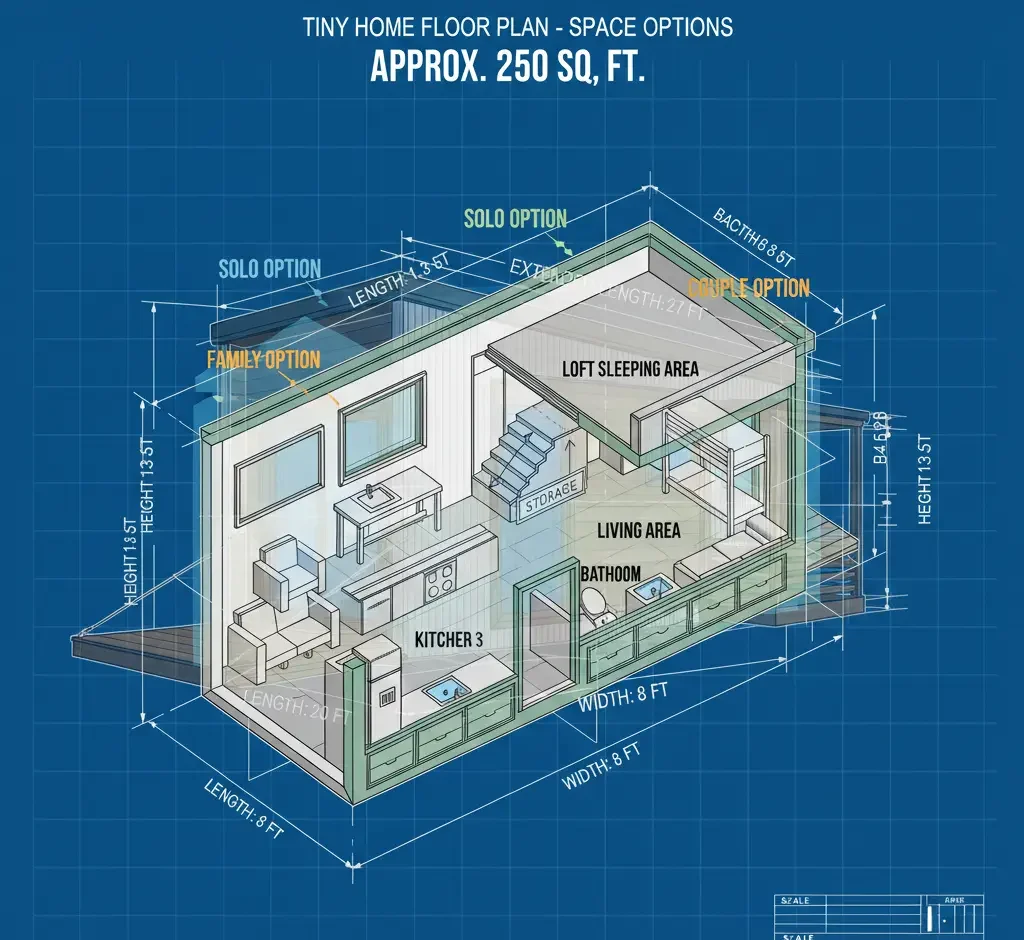
- Solo residents may find 150 to 250 square feet sufficient, offering compact efficiency without sacrificing comfort.
- Couples often need 200 to 300 square feet, balancing sleeping, kitchen, and living space.
- Small families may require 300 to 400 square feet to accommodate lofted sleeping, storage, and shared living areas.
Here’s a table for clear understanding:
| Solo Living | Couples | Small Families |
| 150–250 sq. ft | 200–300 sq. ft | 300–400 sq. ft |
Role of the Budget
Budget considerations also play a role here.
- Smaller homes reduce material and construction costs but limit storage and flexibility.
- Larger homes increase costs but provide more living comfort and layout options.
Planning for Guests and Storage
Prospective owners should also consider guests, storage needs, and potential future changes in lifestyle.
Tiny Home Layout Ideas
Layout decisions are crucial in tiny homes, as every square foot counts.
- Open-concept layouts offer a sense of spaciousness, while partitioned designs can provide privacy in shared living arrangements.
- Lofted sleeping arrangements maximize vertical space, freeing the main floor for living or dining.
- Kitchen and living area combinations allow compact efficiency without feeling crowded, and bathroom layouts must balance usability with minimal footprint.
Note: Creative design choices, such as multi-functional furniture or sliding partitions, can further enhance livability.
To better understand how these layout ideas are planned and documented, explore our guide on types of rooms in a house and how space allocation impacts functionality and flow.
Common Mistakes in Tiny Home Dimensions
Many tiny home owners make mistakes that compromise livability.
- Ignoring headroom can make lofts uncomfortable.
- Underestimating storage needs leads to clutter.
- Overloading trailers with heavy additions may create safety issues.
- Failing to account for local building codes can result in fines or halted construction.
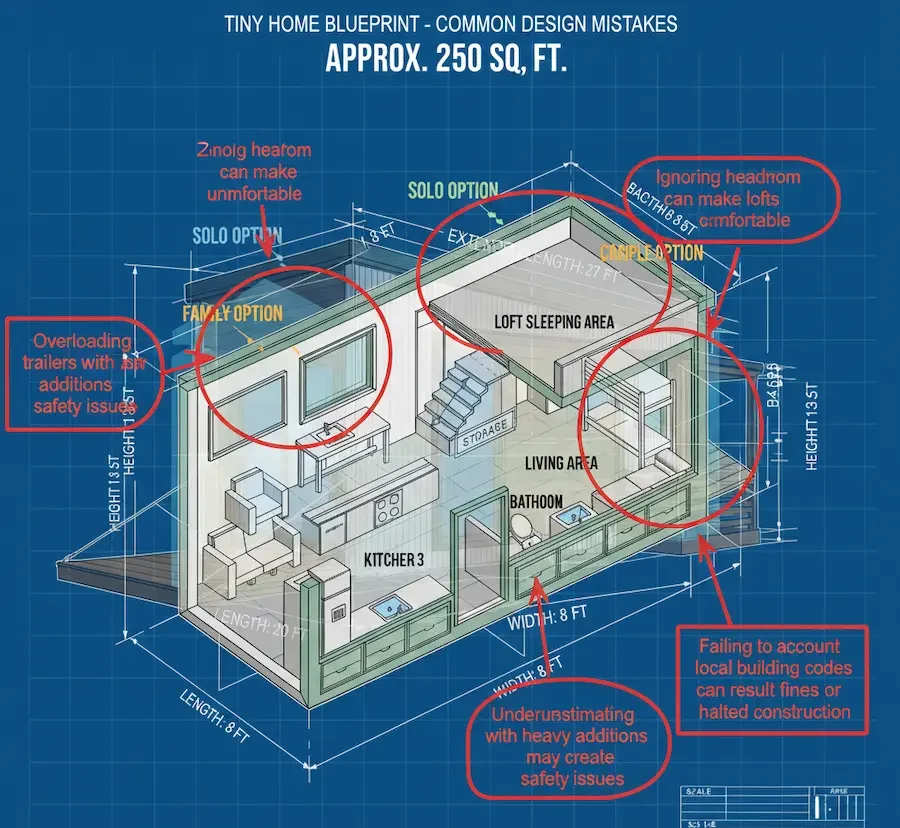
Careful dimension planning and awareness of legal requirements are essential for avoiding these common pitfalls.
Tips for Maximizing Space in a Tiny House
Maximizing space requires smart strategies.
-
- Multi-functional furniture, foldable tables, and convertible beds can transform small areas into usable living spaces.
- Smart storage solutions, including vertical shelving and under-loft storage, help maintain organization.
- Minimalist design choices reduce clutter and enhance visual perception.
- Thoughtful use of lighting and color can make interiors feel more spacious than they are.
Small space doesn’t mean small comfort. Learn how smart design can completely transform your tiny house
How to Choose the Right Materials that Align With a Tiny House Size
Material selection impacts both weight and interior space.
- Lightweight materials are ideal for trailer homes to remain road-legal, while heavy materials may be better suited for foundation builds.
- Insulation thickness affects interior dimensions.
- Durable finishes ensure long-term usability without compromising the compact footprint.
Tiny Home Feature Checklist Table
| Feature | 150–200 sq. ft. | 200–300 sq. ft. | 300–400 sq. ft. |
| Lofted Bed | Yes | Yes | Yes |
| Full Kitchen | Partial | Full | Full |
| Full Bathroom | Compact | Standard | Standard |
| Outdoor Deck | Optional | Optional | Recommended |
| Storage Space | Minimal | Moderate | Ample |
Cost Implications of Different Tiny Home Sizes
Tiny home size significantly affects construction and furnishing costs.
- Larger tiny homes naturally require more materials, increasing the base cost.
- Trailer homes may be less expensive in terms of materials, but they might require investment in towing vehicles and insurance.
- Interior furnishing and appliances add further costs
So, careful planning ensures that the home’s size aligns with budget constraints without sacrificing livability.
Here’s a table showing a cost breakdown by tiny home size/type
| Tiny Home Size (sq. ft.) | Trailer Home Cost | Foundation Home Cost | Notes |
| 150–200 | $60,000–$80,000 | $70,000–$90,000 | Solo living, minimal design |
| 200–300 | $80,000–$100,000 | $90,000–$120,000 | Couples, functional loft |
| 300–400 | $100,000–$120,000 | $110,000–$140,000 | Small family, extra storage |
Frequently Asked Questions
What is the average tiny home square footage?
Most tiny homes range from 200 to 300 square feet, enough for a comfortable, functional living space.
Are tiny homes on wheels smaller than foundations?
Generally, yes. Trailer homes are limited by road width, height, and length, while foundation builds can expand slightly in square footage.
How big is a tiny house legally?
Road-legal limits typically allow a width of 8.5 feet, a height of 13.5 feet, and a length up to 30 feet. Foundation homes may have different local zoning restrictions.
Can you expand your tiny home later?
Some designs allow modular additions, but planning for expansion requires legal and structural consideration.
What’s the smallest livable tiny house size?
Around 100 square feet, suitable for highly minimalist living.
Conclusion
Tiny home dimensions are more than numbers; they shape daily living, comfort, and lifestyle. Understanding the differences between trailers and foundation builds, interior layouts, and practical uses of space ensures that a tiny home works for its occupants. Whether you’re building for solo living, a couple, or a small family, careful planning allows a compact space to feel functional, efficient, and surprisingly comfortable.
For anyone considering a tiny home, working CAD Drafters can ensure every inch is optimized as our team provides home dimensions that meet both lifestyle and legal requirements. Contact us now!