Imagine you’re on a construction site on a freezing winter morning. The concrete forms feel bone-chilling, and the laborer’s fingers are numb. Inside the nearby office trailer, the electric heater is working efficiently, warming the air. You realize heat isn’t just about comfort; however, it’s a life-saving, efficiency-driving force.
Heat transfer is the process of moving thermal energy (heat) from one place to another. It supports everything from keeping a building cozy to cooling high-tech equipment in construction and engineering projects. Let’s understand what heat transfer means, how energy flows through walls and machines, so that you can control it for safety, comfort, and performance.
The Benefits of Heat Transfer
When heat moves where it should, everyone wins. Proper heat transfer design keeps people comfortable and safe, powers our daily tasks, makes factories work efficiently, and even helps the planet. Here’s how:
● Human Comfort & Safety
Think about that freezing job site trailer. Without heating, workers might shiver, make mistakes, or get hypothermia (a medical situation due to sudden heat loss from the body). In summer, air conditioning moves heat out of buildings, so working teams and families stay cool.
Proper heat flow prevents pipes from freezing, fires from starting, or machines from overheating. In other words, proper heat transfer design in HVAC systems, fireproof materials, and protective clothing literally keeps people alive and well.
● Daily Living & Sustenance
Every time we cook dinner or chill milk in the fridge, heat transfer is at work. Boiling pasta uses hot water (convection & conduction) to cook food; an oven radiates heat to bake a cake. Furthermore, refrigerators pump heat from inside to the room, keeping food fresh. In farms, greenhouses use infrared heat from lamps or the sun’s rays to grow plants.
In 2023, the International Renewable Energy Agency reported that heating and cooling account for about half of global energy use. Therefore, managing that heat smartly feeds and fuels our world efficiently.
● Industrial & Technological Efficiency
Modern factories and machines produce tons of heat. If left unchecked, that heat wastes energy or even causes breakdowns. Efficient heat transfer in engines, power plants, and data centers means more power output and fewer failures. For example, advanced cooling on a phone or computer, using conduction through heat sinks plus convection and advection via fans, keeps devices running fast instead of throttling or burning out.
Projects that optimize heat flow cut fuel use and emissions. The thermal management market is growing fast, projected from ~$20 billion in 2025 to $30 billion by 2030, showing how critical efficient heat control has become.
● Environmental & Natural Balance
Nature thrives on balanced heat exchange. Oceans absorb and distribute heat via currents, while forests and soils regulate temperature through evaporation. In engineering, professionals ensure that balance.
Waste-heat recovery systems capture excess heat from factories or cars and turn it into power or building warmth. Urban planners design materials and spaces to reflect or block solar heat, cutting energy use. Researchers are even exploring new alloys and radiative materials to capture sunlight for solar fuels. As worldwide energy demand grows, smart heat transfer strategies reduce waste and greenhouse gases, making construction more sustainable.
Fundamentals of Heat Transfer
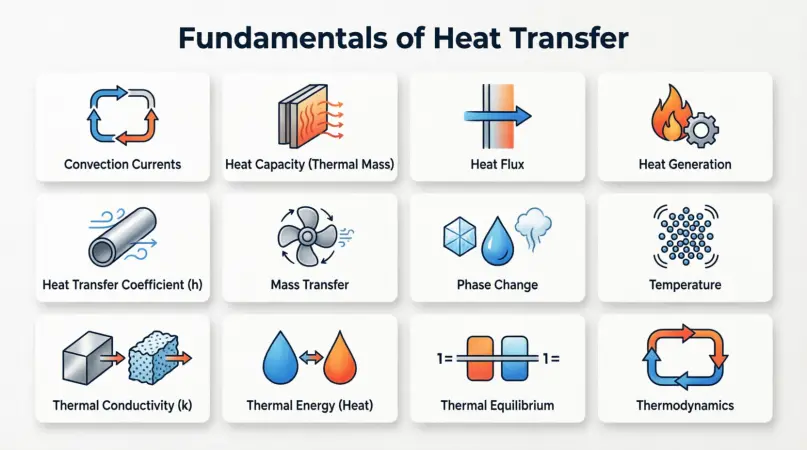
Understanding heat transfer starts with a few key ideas about how heat behaves. These fundamentals explain what happens when a warm zone meets a cold one.
● Convection Currents
When a fluid, like air or water, is heated, it becomes less dense and rises. Cooler fluid sinks. This loop, hot fluid rising and cold sinking, drives convective currents.
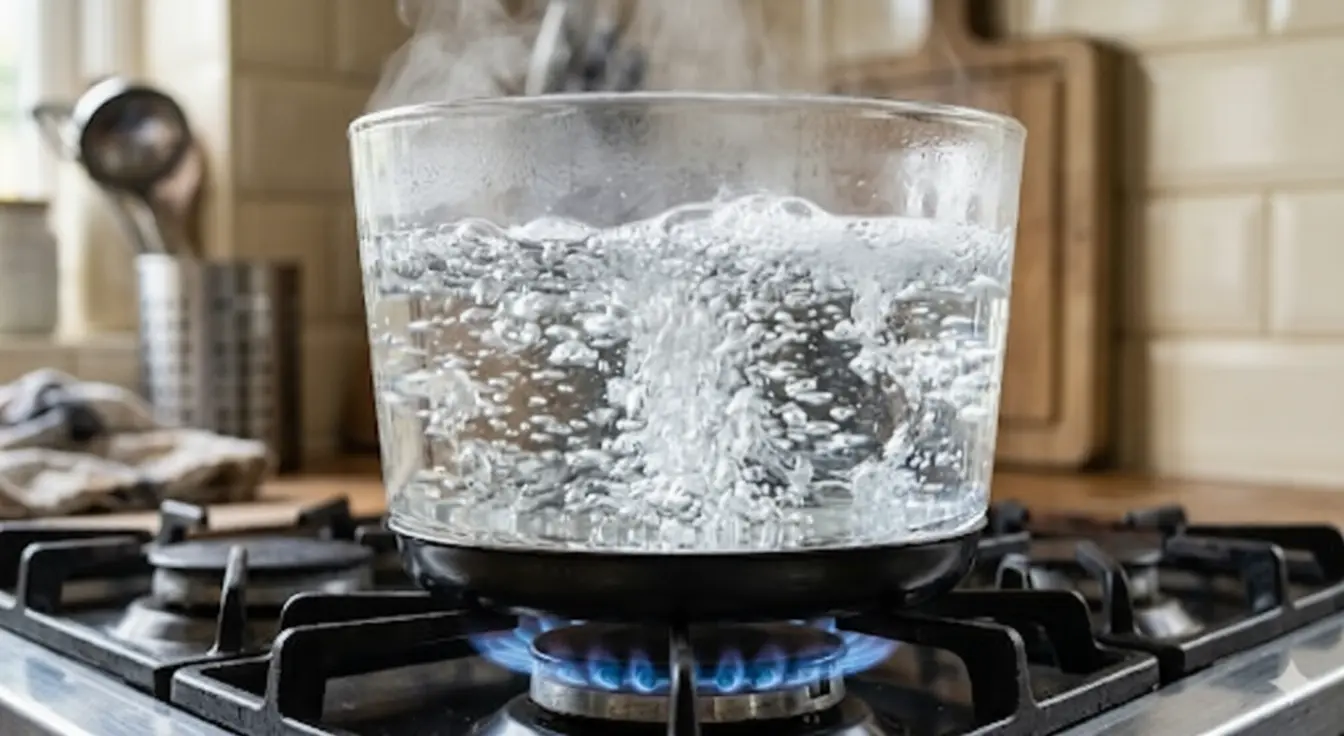
Have you ever watched water swirl in a boiling pot? That swirling is convection at work. In construction, ventilation uses this. Warm air rises to the roof vents, drawing in cooler air. Teams rely on convection to circulate warmth or coolness in buildings and machinery.
● Heat Capacity (Thermal Mass)
This is how much energy a material holds as it warms. A heavy stone wall has high thermal mass as it takes lots of heat to raise its temperature, and it cools slowly. Concrete floors, brick walls, and water tanks use high heat capacity to stabilize temperatures.
For example, a sunlit concrete floor in a greenhouse warms up slowly and keeps plants cozy even after sunset. Materials with high heat capacity help buildings stay temperate and save energy.
● Heat Flux
Imagine heat flow like water flow. Heat flux is the flow rate of heat, showing how much thermal energy moves through a surface per second, per area. In the real world, engineers measure heat flux to see if insulation is doing its job or if a wall is leaking heat. Higher flux means faster energy transfer.
● Heat Generation
Sometimes heat is made on purpose or as a byproduct. Combustion engines burn fuel, batteries leak heat, and even friction in machines creates warmth. Nuclear power relies on fission heat.
In buildings, appliances and lightbulbs add heat indoors. Recognizing sources of heat generation is crucial; designers must accommodate that extra heat and route it away so systems don’t overheat or waste energy.
● Heat Transfer Coefficient (h)
This symbol h measures how effectively heat moves between a surface and a fluid, air or liquid touching it. Consider a hot pipe exposed to air: the higher the heat transfer coefficient, the faster the pipe sheds its heat into the air. It depends on material properties and fluid speed.
In HVAC design, selecting fans or ducts changes the heat transfer coefficient, improving heating or cooling efficiency.
● Mass Transfer
This isn’t heat itself, but when mass, like water vapor or hot air, moves, it carries heat energy too. For example, a ventilator moving warm air into a room is both a mass and a heat transfer. Therefore, you must sometimes consider both together, like humidifying air (mass) while heating it (energy).
● Phase Change
When matter changes state, like ice to water & water to steam, it absorbs or releases lots of heat. Steam engines and refrigerators use this. Melting ice absorbs heat without changing temperature, keeping buildings cool; in air conditioning, vaporizing coolant pulls heat from indoors.
Engineers use phase change materials, like special salts, in walls to store excess heat during the day and release it at night, efficiently regulating indoor climate.
● Temperature
Essentially, temperature measures how fast atoms in a material are moving. The greater the molecular motion, the hotter the object. Heat transfer happens when fast-moving (hot) atoms bump into slower (cold) ones, passing energy along.
● Thermal Conductivity (k)
Denoted by k, this is a material’s talent for conducting heat. Metals, like copper or aluminum, have very high conductivity, which means they quickly spread heat. On the other hand, insulators, like wood or fiberglass, have low conductivity.
Its inverse is thermal resistivity. For example, a steel beam will quickly get hot if exposed to fire, while a concrete block heats up slowly.
● Thermal Energy (Heat)
Heat itself is the energy from tiny atomic motion or vibration. When you touch a warm mug, heat is moving from the mug’s atoms to your cooler hand’s atoms. In construction e-sign terms, professionals usually talk about heat as energy in transit.
● Thermal Equilibrium
This is the peaceful end state when 2 things in contact reach the same temperature. Suppose you are walking from a cold basement into a warm room: until they balance out, heat is still moving. Expert building designers always aim for thermal equilibrium; for instance, well-insulated homes minimize heat flow once they’re heated.
● Thermodynamics
This is the big-picture science of heat, work, and energy. The laws of thermodynamics tell us, for example, that heat naturally flows from hot to cold. In practice, teams constantly apply these principles in CAD design, HVAC planning, and material selection to predict how energy will move through a structure or machine.
The Four Modes of Heat Transfer
Heat can move in four distinct ways. In real systems, several modes often act together, but it helps to think of them separately:
● Advection
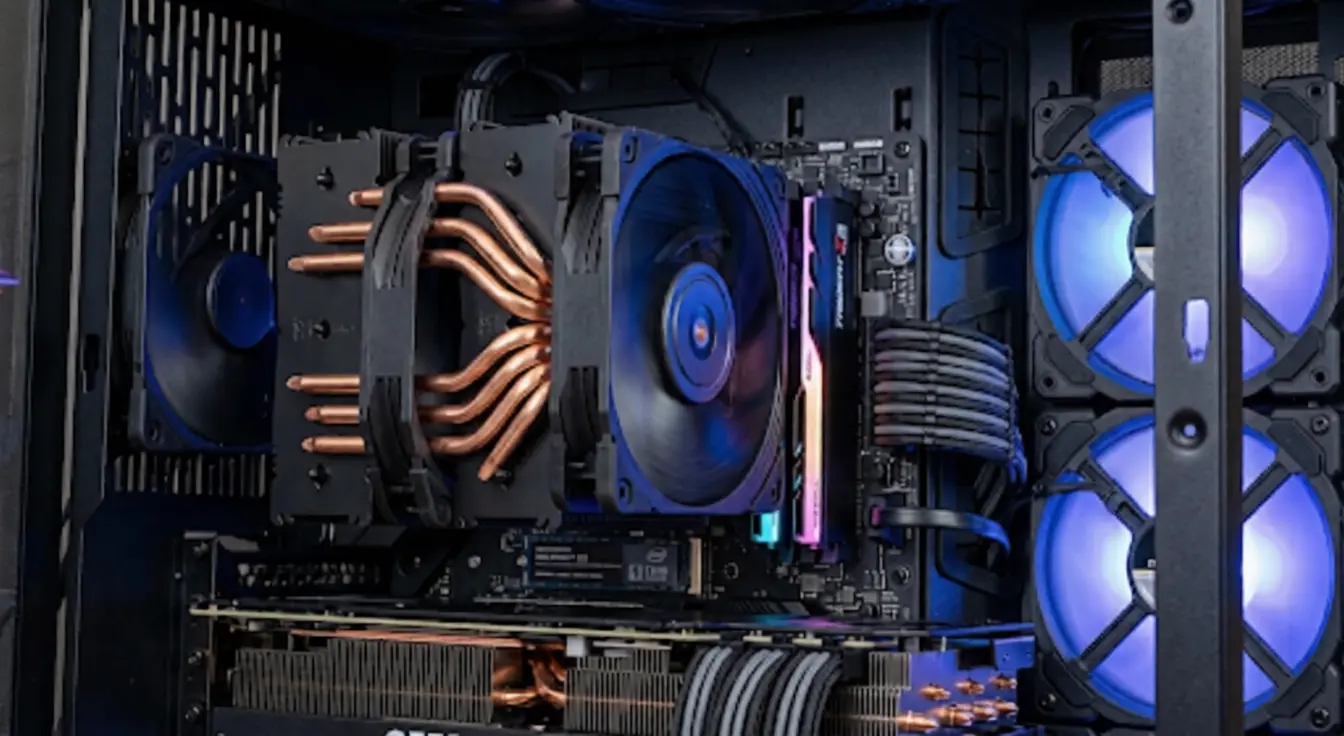
Imagine a powerful fan inside a PC or a jet engine forcing air through. Advection is heat carried by bulk fluid flow that’s driven by something, like a pump or fan. In other words, the fluid itself transports heat.
A classic example is a fan cooling a computer motherboard: the fan blows air or fluid over hot chips, carrying heat away. Another example is a pump circulating coolant in a car engine: the moving liquid takes heat from the engine to the radiator.
● Thermal Conduction
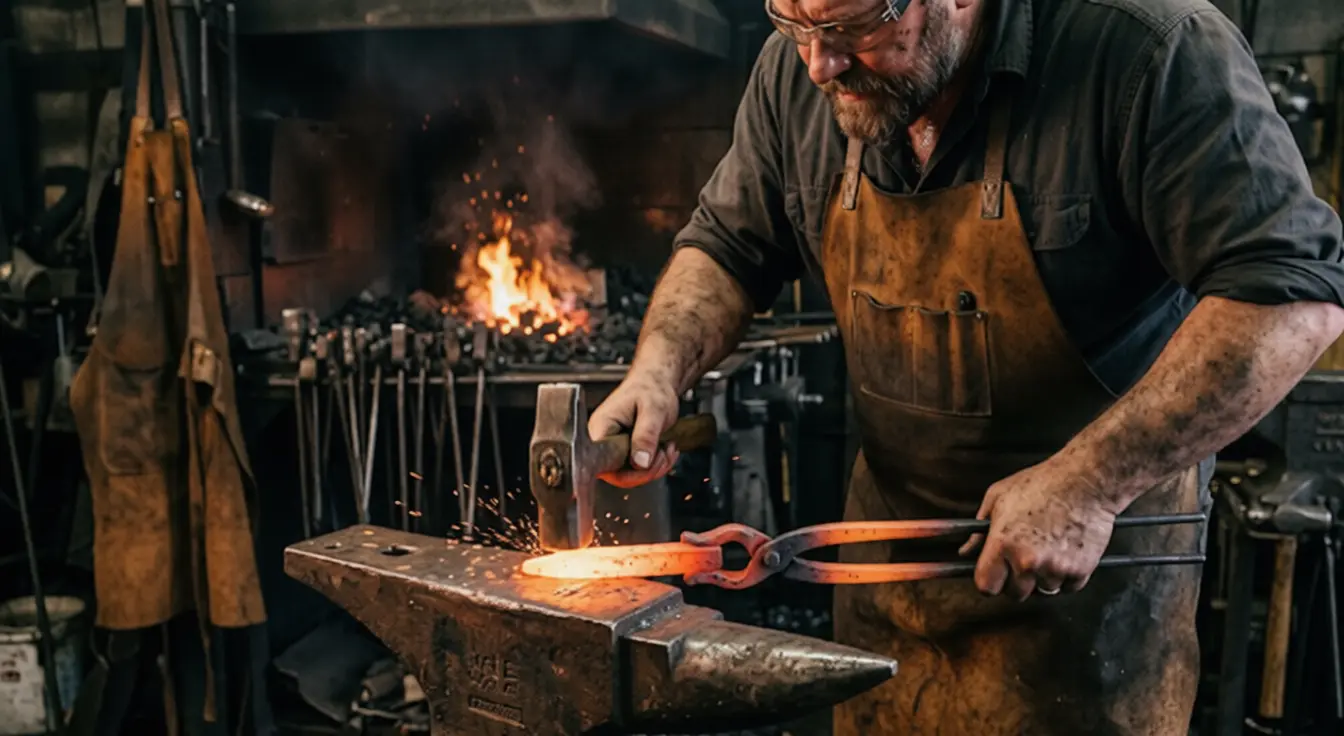
This is heat flow through solid materials or between touching objects due to a temperature difference. Consider heating one end of a metal rod: the warmth conducts along the rod to your hand. The rate depends on thermal conductivity k and the temperature gradient.
For example, the handle of a hot stove pot conducts heat away from the pot’s bottom toward the cooler handle. If you grip the pot, your hand feels the heat traveling through the metal.
● Convection
Here, fluid motion is driven by buoyancy from temperature differences. Hot fluid rises, cool fluid low down, creating circulation. Put water in a pot on the stove. As the bottom heats, that water rises, and cooler water descends, setting up a swirl. A pump does not force it, but naturally by density change.
In HVAC, this is like warm air from a heater rising to the ceiling and cool air dropping, creating a circulation that warms a room. If you leave a hot cup of coffee out, heat moves to the air above by convection.
● Radiation
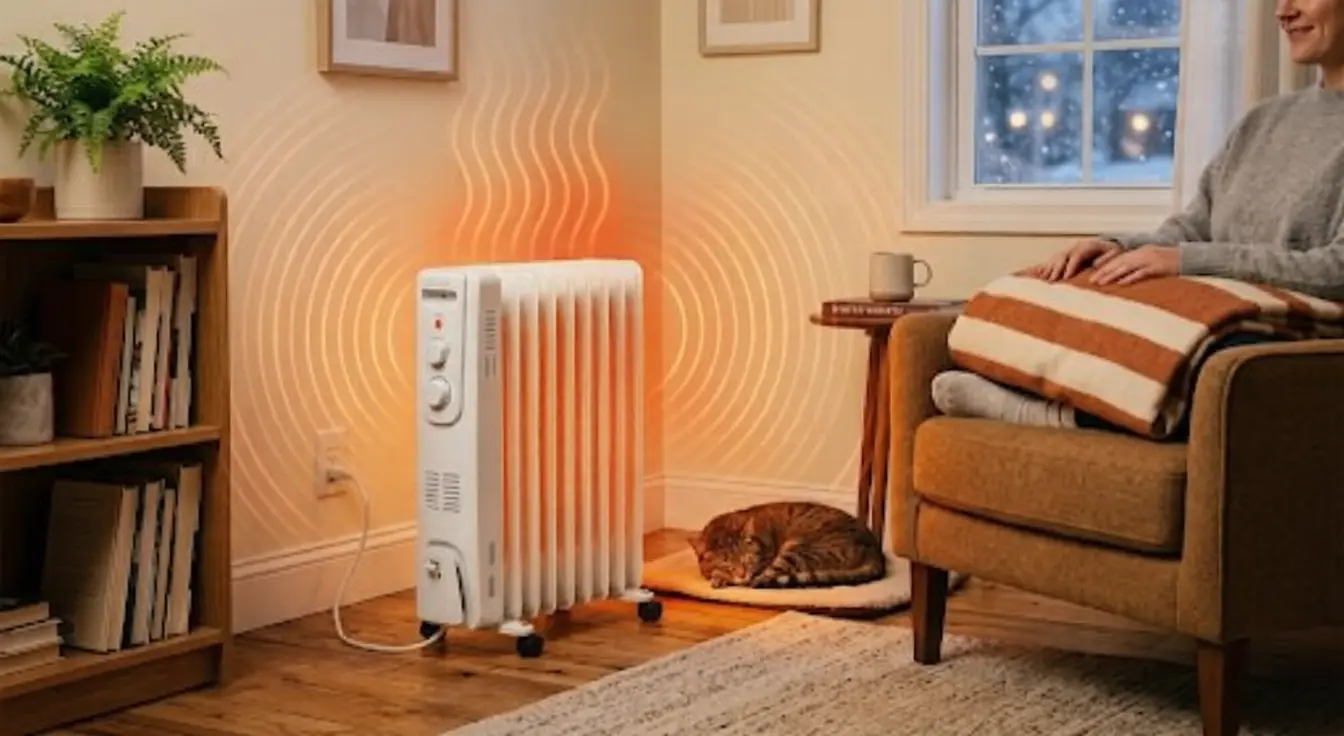
This is heat transfer via electromagnetic waves (often infrared). No fluid or contact is needed because heat radiates through the vacuum or air. The sun heating the Earth is the most obvious example of radiation.
Closer to home, a radiant heater or a glowing hot pipe emits infrared radiation that warms nearby objects. Even in space, with no air, spacecraft components gain or lose heat by radiating energy.
Key Heat Transfer Properties in Engineering
Every heat-transfer problem boils down to some essential material and system properties. Here are the crucial ones:
- Thermal Conductivity (k): How well a material conducts heat. Units: W/(m·K). Metals have high k, insulators have low. It dictates conduction speed.
- Heat Transfer Coefficient (h): Relates convective heat flux to temperature difference. Units: W/(m²·K). Higher h means faster cooling/heating in a fluid flow.
- Thermal Diffusivity (α): α = k/(ρ·c_p). It combines conductivity with density ρ and specific heat c_p to say how quickly a material’s temperature changes. High α means temperature evens out fast.
- Emissivity (ε): How strongly a surface emits or absorbs thermal radiation (0 to 1). A black-painted panel (ε≈1) radiates heat much more than shiny metal (ε≈0.1). It appears in Stefan–Boltzmann’s law for radiative heat flux.
- Specific Heat Capacity (c_p): How much energy it takes to raise a mass by 1°C. Units: J/(kg·K). Water’s c_p (≈4184 J/kgK) is huge; it absorbs lots of heat per degree. Materials with high c_p can store more heat energy.
- Density (ρ): Mass per volume (kg/m³). Denser materials often store more energy at a given temperature (since total mass is more).
- Thermal Resistance (R): A measure of resistance to heat flow. For a layer: R = thickness/(k·area). Higher R, like thick insulation, means slower heat transfer.
The Role of Heat Dissipation in Modern Design
Heat dissipation, which means the ability to shed unwanted heat, is central to designing anything from phones to factories. Modern projects consider dissipation for:
● Performance Optimization and Stability
You know that devices run faster and more smoothly when hot spots are controlled. A smartphone throttles performance if it overheats.
By including thermal vias and copper heat spreaders, designers ensure chips stay in the sweet spot. Ultimately, we experience better performance under heavy loads.
● Reliability and Longevity
We all know that excessive heat shortens lifespans. Electronic components, machinery bearings, and even building materials can degrade under high temps.
For example, keeping an LED light cool prevents color shift and early failure. Effective heat sinks, cooling fins, and ventilation increase the reliability of equipment, whether it’s a data center or a kitchen oven.
● Miniaturization and Compact Design
As tech goes smaller, like drones, EVs, IoT sensors, components pack tighter. Removing heat becomes trickier. Engineers use high-conductivity materials and advanced cooling, like micro heat pipes, so gadgets can shrink without melting.
This lets architects and builders create slimmer profiles and more complex mechanical assemblies without overheating—for example, compact HVAC units or embedded computing in smart home devices.
● Safety and Energy Efficiency
Safe designs avoid fire and burns by controlling heat. Homes with fireproof drywall, cars with thermal barriers on exhaust systems, that’s heat dissipation at work. You can understand this concept with energy use, where better heat management means heaters and coolers run less, saving electricity and cutting carbon.
Modern LED bulbs and EV batteries are engineered with dissipation in mind; an EV battery pack includes coolant loops to keep cells efficient and prevent overheating.
● Advanced Simulation and Simulation-Driven Design
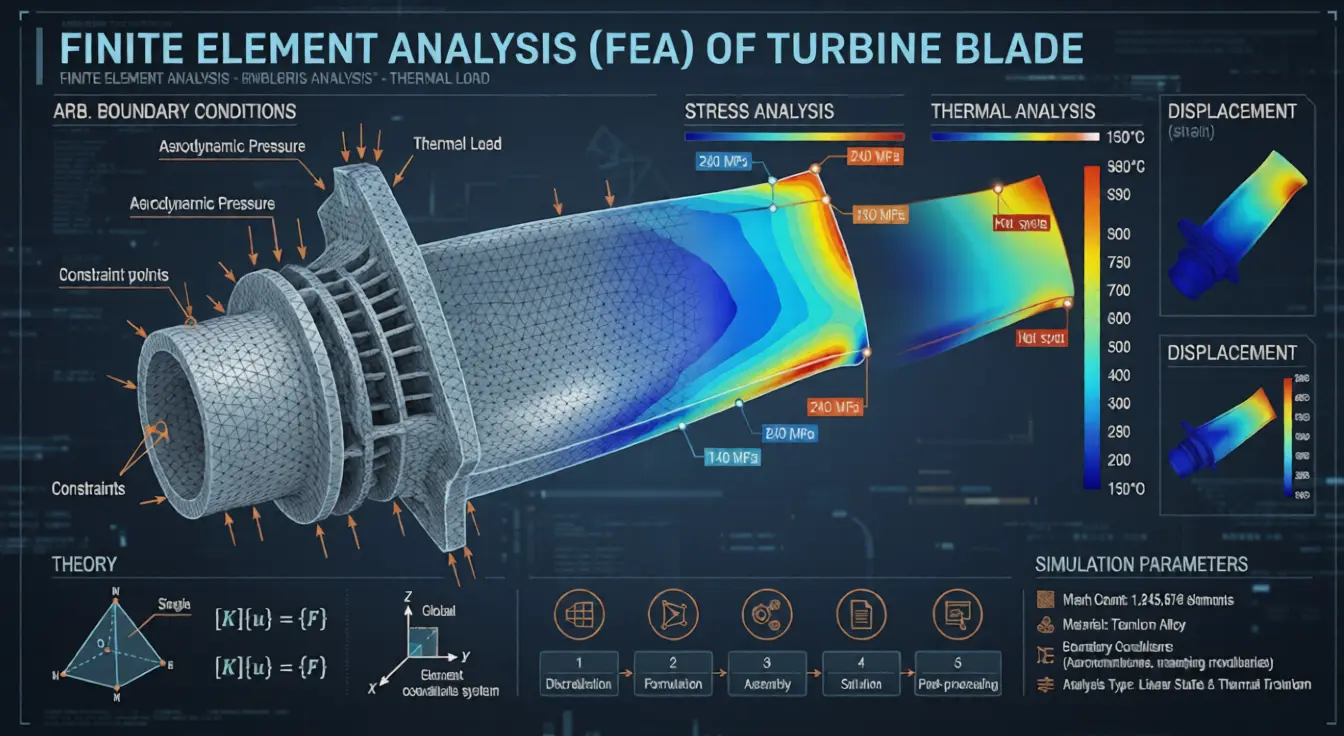
Today’s engineers rely on simulation to predict dissipation. Using CFD and FEA tools, we can model how heat pipes, fans, or insulation affect a design before building it. This simulation-driven approach has transformed industries.
For example, electronics designers use specialized apps, like Ansys Icepak, for vertical thermal apps that automate model setup. In construction, software can simulate sunlight on building facades to select materials that dissipate heat to meet green building standards.
Different Materials’ Thermal Behavior in Heat Transfer
Choosing the right material is a big part of managing heat. Here are four common classes of materials and their thermal properties, plus some rules of thumb:
● Metals
They are excellent heat conductors, including copper, aluminum, and silver. You can use them for heat sinks, fins, and pipes. Remember that thin metal layers quickly spread heat, but beware, they may also lose heat fast if not insulated properly.
● Ceramics
Some ceramics, like aluminum nitride and silicon carbide, conduct heat well and withstand high temps. Others, like porcelain, insulate. They are often used as substrates for electronics or furnace linings.
● Polymers/Plastics
They are generally insulators, meaning they have low k. However, some filled polymers can reach moderate conductivity. You can use plastics for housing that keep heat in or out, like coolers. In CAD, assign low thermal conductivity to polymer parts and verify if they cause unwanted heat trapping.
● Composite or Carbon Materials
Carbon fiber or graphene composites can be very thermally conductive along one direction. They are trendy in high-end electronics for directing heat. Note: They often require directional analysis in CAD and anisotropic thermal conductivity.
Important bullets:
How to Choose the Best Material for Ideal Heat Transfer?
- Compare material thermal conductivities (W/m·K) and heat capacities.
- Consider thickness and shape.
- Account for environmental factors in simulations and takeoff sheets.
Recommendations for Simulating Heat Transfer
1. Determine Steady or Transient Needs.
Do you need a snapshot or the full story over time? If steady-state is enough, like final temperatures in a well-insulated wall, simulate once. If the scenario changes, like sunrise to sunset heat on a roof, run a transient analysis. Consider how fast temperatures change.
2. Know Your Material Properties.
Input accurate thermal conductivity, density, and specific heat into your model. Mistakes here can damage the whole analysis. For example, using brick instead of concrete in the wall layers will give a wrong temperature rise. Therefore, use trusted databases, like Ansys Granta, or supplier data.
3. Understand Boundary Conditions and Control Volumes.
Clearly define where heat enters or leaves your system. In a building model, set the outdoor temperature and indoor loads correctly. Sketch each region (slabs, pipes, fins) before building your model. For example, draw where fans blow air or insulation stops.
4. Accurately Capture Fluid Velocities.
Convection heat flow depends on fluid speed. If you have forced air or liquid cooling, set those flow rates in the sim. For simple cases, a known velocity can be a boundary condition, or a 1D fluid network can be used. For complex flows, like around buildings or inside a radiator, use CFD to model turbulence and mixing.
5. Simplify Models When Possible.
You don’t always need every detail. Keep your model flawless. For example, tiny screw holes on a block might not affect heat much, so remove them. Replace complex geometry with equivalent fins or 1-D networks if it saves time. Use symmetry if available; model half of a symmetrical wall.
6. Leverage Vertical Electronics Tools
If designing for gadgets, use specialized software. Ansys Icepak or similar vertical applications are tailor-made for PCBs and electronics. They include models for components, fans, vents, and even predefined loads. These apps automate thermal stacks and mesh settings that would be a headache in generic CFD tools. This means faster, more reliable thermal design for any tech-heavy structure.
Common Engineering Challenges & Solutions
● Resource Constraints
This means that your project budget and time are tight. Skipping insulation or testing can save money now, but cost in rework or inefficiency later.
Solutions:
- Prioritize critical areas, like the attic and equipment cooling.
- Use simplified models early.
- Leverage standard materials and proven designs for reliability.
● Keeping Up with Technological Advancements
New materials and methods appear constantly. It’s hard to know what’s best for your project.
Solution:
- Continue learning. Attend industry workshops and webinars.
- Use CAD libraries that update material properties
- Partner with specialists when exploring new tech.
● Adhering to Regulatory Compliance
Building codes and safety standards, like fire codes, ASHRAE thermal standards, can be complex. Missing a specific can destroy the project.
Solution:
- Stay informed on regulations early. Use CAD rules-checking features to verify code compliance.
- Draw on in-house or external expertise.
- Employ compliant standard details from CAD drafting resources.
● Project Management and Coordination
Thermal design isn’t done in a vacuum. Architects, mechanical engineers, and drafters must align with things like duct routes or material choices.
Solution:
- Communicate often: Involve CAD drafters in early design meetings.
- Implement BIM/CAD coordination sessions to clash-detect thermal elements.
● Sustainability and Environmental Impact
There’s growing pressure to design green buildings. This means considering heat transfer in energy models and life-cycle impacts.
Solution:
- Evaluate energy use from the start. Use CAD-integrated energy simulation tools for building designs.
- Optimize for passive solutions first; maximize natural ventilation and daylight in layouts.
- Employ renewable heat options; this means plans for solar heating or heat recovery in mechanical schedules.
In all these challenges, CAD Drafters’ expertise can make the difference. Our team knows not just CAD, but the engineering behind it, helping you avoid mistakes and get efficient solutions.
Heat Transfer & CAD Drafting in Construction
CAD drafting is where design meets reality, and heat transfer plays a growing role in construction drawings:
● Thermal Simulation in CAD
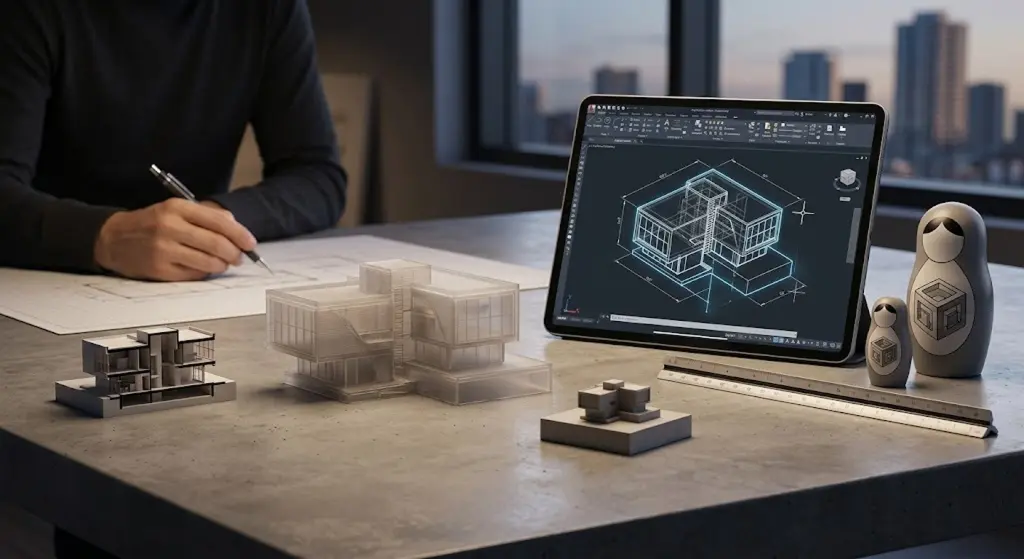
Modern CAD tools let drafters perform thermal analysis alongside drawing creation. For example, a Revit model of a building can simulate solar gain through glass and roof insulation performance.
CAD drafting services now include thermal modeling, so the MEP (mechanical/electrical/plumbing) layouts you draft can be validated for heat flows. This means you can catch an underperforming wall section in the drawings and fix it before construction starts.
● Material Optimization
Drafters specify materials via BIM or CAD layers with thermal data. If an architect chooses a new composite wall panel, a CAD drafter can run a quick U-value calculation to ensure it meets insulation needs.
In mechanical systems, picking duct lining or pipe insulation is done at the drafting stage. Remember that design sets include these thermal details, and if you are confused between design and shop drawings in construction, see our guide: The Difference Between Design Drawings and Shop Drawings!
● Thermal Management Design
HVAC and plumbing drawings are all about heat control. CAD drafters detail the paths for hot air, cold water, refrigeration lines, and more. The drawings include heat exchanger sizes, pipe gradients, and airflow directions that ensure efficient thermal management on the actual site.
● Simulating Environmental Impact
Engineers now often simulate how a new building will heat up during a summer day or retain warmth at night. CAD models can run seasonal thermal studies. They incorporate shading devices, like louvers or overhangs, in the model to reduce cooling loads. Accurate CAD drafting gives estimators the exact takeoffs or quantities of thermal materials needed to meet energy codes.
If you want to know about takeoffs in construction, see our guide: What is a Construction Takeoff?
Ready to keep your project cool or warm under pressure? Contact CAD Drafters today for precision drafting services that put heat transfer in its place!
FAQs
How to determine the heat transfer coefficient?
You measure or calculate it based on the fluid and flow conditions. You can use empirical correlations, like Nusselt number formulas, or experiment with a sample. CAD tools often have libraries or analysis plugins that estimate h for common fluids and flows.
How does CAD transform thermal analysis?
CAD makes it visual and exact. Instead of sketching heat paths on paper, you can build a 3D model and apply thermal loads directly. For instance, in a 3D BIM model, you can assign solar loads on windows and insulation on walls, then run an energy simulation to see temperature distributions.
How to integrate heat transfer analysis into the CAD workflow?
Start by assigning material properties (k, density, etc.) to your CAD elements. Then use built-in or add-on simulation tools. Many CAD platforms support plugins for CFD or FEA (e.g., Revit’s MEP analysis or integrated ANSYS connections). Often, setting up an energy model is just a matter of checking some boxes in the project setup.
Always cross-check: import thermal loads from climate data, define HVAC equipment, and let the CAD model calculate airflows and heat flows automatically.
Why must designers understand the thermodynamics of a project?
Because heat is energy, and uncontrolled heat means inefficiency or failure. Understanding heat ensures spaces are comfortable, machines last longer, and energy bills stay low.
How is heat transfer linked with modern engineering?
Today’s engineering is all about sustainability, smart tech, and miniaturization, and heat transfer touches all that. Green building, high-efficiency motors, renewable energy, and advanced electronics all rely on precise thermal control. Engineers must think “how will this get hot, and how will I get rid of it?” at every step.
Conclusion
Heat transfer isn’t just an academic concept; it’s woven into every plan professionals draft. You have seen how moving thermal energy matters for comfort, safety, technology, and the planet. Remember that heat moves from hot to cold by conduction, convection (or advection), and radiation; materials’ properties, like conductivity and capacity, dictate how fast it flows; and smart design channels heat where you want it, whether that’s into your home or away from sensitive electronics. By mastering heat transfer fundamentals, engineers and CAD drafters work together to optimize systems, from cozy buildings to high-performance machines.
At CAD Drafters, we bring that expertise to your projects. Our team knows how to make your drawings reflect optimal thermal solutions, meaning correct materials, insulation placements, duct sizes, and more. We can integrate advanced simulations and ensure your shop drawings capture all the details so that what you build matches the thermal performance you need.